


AI coding assistants
- Cursor
- GitHub Copilot
SERVICE
Built something with Cursor, Lovable or v0? A senior Milo engineer reviews your codebase and tells you what to keep, fix or rebuild. AI is a force multiplier for an experienced engineer, and a shortcut that quietly accumulates debt for everyone else.

AI can take you from idea to demo in a weekend. Whether that demo can become a real product depends on who's steering it.
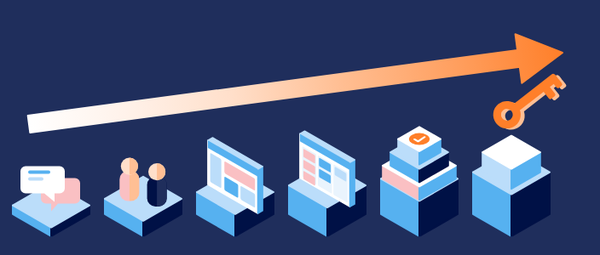
Every unreviewed AI shortcut looks fine on its own. Read it top to bottom, like a bill — this is how ten-plus rebuilds happened in six months.
AI plus a senior engineer reviewing every line
THE FOUNDATION
AI-assisted development stays safe here
No one on the team can read the code AI wrote
An AI-generated scope document sent to a vendor, unread
A frontend that looks finished with no backend behind it
An optimistic estimate, taken at face value
A full rebuild — the same result, every time
Every one of these felt like a shortcut in the moment.
We use AI where it's strong — and put a senior engineer wherever the stakes are higher.
Test ideas and features with shorter development cycles.
Explore solutions and alternatives with AI assistance.
Keep AI-assisted code clean, structured, and maintainable.
Explore new ideas while keeping development under control.
Business Operations

Pythia Store helps retail managers make smarter decisions by listening — literally — to what’s happening in their stores.
It captures in-store audio, analyzes it with AI, and delivers tailored recommendations straight to each manager’s inbox.
Milo partnered with Pythia Store's founder to design and build the entire system: embedded software to record and transmit in-store audio, a secure backend to process and analyze data, and a clean, responsive web platform for browsing insights. We also handled integrations with tools like Whisper AI, Gemma 3:27b, Resend, and Klaviyo — all hosted on scalable AWS infrastructure. Finally, we designed and prepared website copy for their Landing Page.
The result is a first-of-its-kind, AI-powered insights system that helps store managers react faster, work smarter, and lead better — even when they’re not on-site.
Business Operations

Charlee.ai helps insurance teams make faster, smarter decisions with the power of predictive analytics. We joined early in their journey—back when the company was known as Infinilytics—to build the first version of their web-based claims intelligence platform.
Over a 12-month collaboration, our team helped turn raw insurance data into clear, actionable insights. Working closely with the founders, we developed the MVP that connected adjusters with real-time flags for risk, fraud, litigation, and reserves. The system analyzed millions of claims using machine learning and NLP to surface patterns that would be invisible to the human eye.
Since then, Charlee has become a trusted partner to insurers across the U.S., powering claims decisions for companies like Snapsheet and earning patents for its technology. We’re proud to have played a role in bringing the platform to life.
No — and the founders who treat it that way are the ones who come back needing a rebuild. AI makes an experienced engineer faster; it doesn't substitute for the judgment that catches its mistakes.
AI code without human oversight accumulates debt fast, and the frontend often looks finished long before there's a real backend, data layer, or infrastructure underneath it. What looks like a product is usually still a prototype.
Only in limited, controlled environments. Data-sensitive markets need a senior engineer defining exactly where AI is allowed to touch the system, and where it isn't.
AI tends to estimate optimistically, and those scope documents are often shared with providers unread. We have a senior engineer stress-test any AI-generated estimate before it goes anywhere near a contract.
Cursor and GitHub Copilot for day-to-day coding, v0 and Lovable for rapid prototyping, and AI for copy, presentations, and ideation — all reviewed by a senior engineer before anything ships.
We only share client code, project information, or data with external AI providers when explicitly agreed upon with the client. AI-assisted development tools are used within the boundaries of each project's agreed requirements and confidentiality arrangements. Without client agreement, project code and confidential client data are not submitted to external AI services.
Picked for founders scoping their first MVP
Development
A software house is a company whose main business is designing and building custom software for other companies, and the client owns what gets built. In US terms, it's a software development company or dev shop, and the US Census Bureau classifies the work as custom computer programming services (NAICS 541511).If you're talking to development firms in Poland or elsewhere in Europe, you've probably seen vendors call themselves a "software house" and wondered whether that's something different from a dev shop.I run Milo Solutions, a Polish software house that works with US clients, and when a founder asks me whether we're just a dev shop, this is what I tell them:Pretty much. "Software house" is the term we use in Europe for what you'd usually call a dev shop in the US.How the work runs matters more than the label. Most of this guide follows one real engagement from the first call to handover, then covers the cases where I'd tell you not to hire a software house at all.
14 min read
Read more
Development
A proof of concept (PoC) tests whether your idea can be built, and a prototype tests whether people want it, while a minimum viable product (MVP) is the first working version that shows whether customers will pay, so the MVP vs PoC choice comes down to your riskiest question. Build the one that tests it first, and skip the rest.Most founders who ask me for an MVP are about to pay for the wrong first build, which is why the first thing I tell them is the line I'd want you to remember:Test the riskiest assumption first. A proof of concept tests the technology, a prototype tests the demand, and an MVP tests whether people will pay.About six in ten of the MVP requests that reach Milo should start with something smaller, while the other four can go straight to an MVP because the technology is proven and the founder has already talked to real users.
14 min read
Read more
Development
If you have a half-built MVP or a backlog that grows faster than your team can ship, someone has probably offered to sell you a discovery phase before any more code gets written.Product strategy services, often sold as a discovery phase, are paid work in which an outside team tests your riskiest assumptions with users and engineers before development starts. What you should get back is a roadmap phrased as outcomes and a scoped first release that a developer can start building from.I run Milo Solutions, a software house, so my team has to build whatever a roadmap says. That gives me a blunt view of strategy work:The most expensive thing a founder can build is the wrong thing, finished. You can't know it's wrong until you test it, and testing is always cheaper before the build than after.Plenty of founders don't need to pay for this at all. If you do, you can judge a provider before signing by asking what you'll be held responsible for when the engagement ends.
15 min read
Read moreLet's talk through what you've already built, what AI got right, and what a senior engineer needs to take it from here.


