


Frontend



SERVICE
We design the architecture first (tenant isolation, permissions, the data model) and build the product on top of it, because those decisions are the hardest to change once customers are using it. From the first user to thousands, that keeps your product fast, secure and easy to evolve.

The technical decisions made early determine how easily your product can grow. We design around scalability, maintainability, performance, and efficient operations from day one.
The right decisions early can keep performance predictable and ongoing costs under control as the product grows.
A strong SaaS foundation — multi-tenant by design
THE FOUNDATION
the foundation pays off here
More customers
Shared infrastructure keeps resources efficient instead of requiring a separate system for every customer.
COST
More usage
Good tenant isolation and workload management help keep performance predictable as demand grows.
PERFORMANCE
More features
Clear architecture makes new functionality easier to change, test, and integrate.
MAINTAINABILITY
More support
Avoiding shortcuts prevents technical debt from becoming recurring development and support work.
RECURRING COST
The value isn't just scaling — it's controlling what growth costs you.
Modern, widely adopted technologies for fast, scalable, maintainable products.












Modern technologies for faster development and iteration.
A flexible foundation built to support growing products.
Popular technologies with large developer communities.
A stack that makes new features easier to build.
Business Operations

Stepwise, a Norwegian startup with US capital, represents our venture into the world of environmental optimization for the oil and gas industry. This project showcases our ability to support startups from concept to implementation, tackling complex analytical challenges in the energy sector. Our partnership with Stepwise demonstrates our expertise in developing sophisticated platforms that help major corporations like BP and Shell optimize their operations and reduce CO2 emissions.
The right approach depends on your product, customer requirements, and expected scale. We design tenant isolation, permissions, data access, and infrastructure together so customers remain securely separated while the platform can efficiently support many accounts.
Scalability should be considered from the beginning, without over-engineering the first version. The goal is to make sensible architectural decisions that support future growth while keeping the initial product fast and cost-effective to build.
Not usually. Multi-tenant SaaS platforms can share infrastructure while keeping customer data and access logically isolated. This can make the platform more efficient and easier to scale as new customers are added.
Usually no. Web is almost always the right call for an MVP, and it already covers laptop, tablet and phone. Add native mobile once the product has proven demand and customers need what only an app can offer, such as offline use or push notifications.
Performance starts with the architecture rather than being treated as a final optimization. Efficient database queries, sensible data models, caching, optimized APIs, and responsive interfaces all help maintain a fast experience as users and data increase.
Practical guidance for building SaaS products
Development
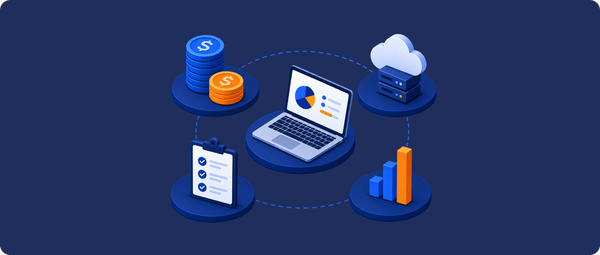
If you have searched for how much it costs to build a SaaS product, you have probably seen a range of $25,000 to $500,000 and closed the tab. That spread is technically true and useless for planning. It also stops at the wrong place, because the build is the first bill, not the whole bill.I run Milo Solutions, and pricing and delivering these products is what we do. So before any number, change the question from "what does it cost to build" to "what am I funding, and for how long?"The short version: a first real version usually runs $25,000 to $70,000 for a basic product and $200,000 to $500,000 or more for a full platform. But plan for two more things from day one. Cloud starts billing at launch, and maintenance over the product's life tends to total two to four times what you paid to build it. Here is how I frame it before we reach line items:SaaS systems are among the top 20% most complex to build, and they are often mission-critical for the businesses that use them. You can prototype a SaaS cheaply, but not one that will scale. There is no way around having a proper budget; it's like wanting to buy a new 'cheap' Porsche. There is no "new cheap" Porsche on the market. Usually, the team that builds a SaaS has a better process for preparing the build than you, as a founder, because they have done it a few times and learned.
14 min read
Read more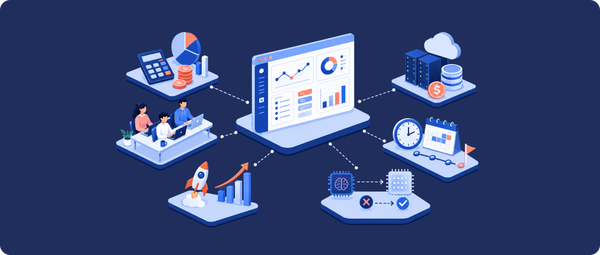
Development
Most pages about SaaS startup costs give you a range so wide it is useless, something like $30,000 to $500,000, and then hand you a sales pitch. I run Milo Solutions, a software agency that builds SaaS products, and this is the article I wish clients read before our first call. It covers what an MVP really costs at 2026 rates and the line items that never appear on a build-cost page, and ends with the year-one total that determines whether your company survives.
12 min read
Read moreLet's define the right technical foundation for your SaaS.


