Milo Solutions
Get in touch

SERVICE

Web application development

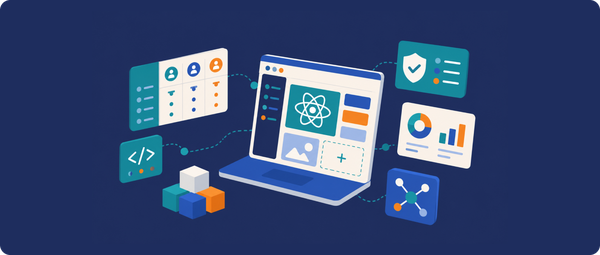
Build scalable, secure, and high-performance web applications that help you launch faster and grow with confidence.

Mobile_-_Web_application_development_GOJJjzR.original
  • Faster time to market
  • Lower development and maintenance cost
  • Accessible on any device, anywhere
View Projects

When to choose web over mobile

Web apps are the smart default for most projects, especially in the early stages.

Web is usually the right choice when:
Mobile might be better when:

Why companies are choosing web applications

Web applications are generally more cost-efficient to build and maintain than native apps because they eliminate the need for separate development across multiple platforms. Instead of maintaining distinct iOS and Android codebases, teams can focus on a single web application that serves all users.
This reduces initial development effort, simplifies engineering complexity, and shortens time to market. Ongoing costs are also lower, since updates, bug fixes, and new features are deployed once and become immediately available to everyone without app store review cycles or fragmented version management.
Over time, this unified approach reduces maintenance overhead and allows teams to allocate more resources toward product improvements and growth rather than platform upkeep.

Align your platform with your growth strategy

Choose the platform that best fits how you aquire users, deliver value, and grow.

User acquisition

How you attract, convert, and onboard new users

  • Organic acquisition channels (SEO, content, referrals)
  • Paid acquisition (ads, PPC, social campaigns)
  • Product-led growth and self-serve onboarding
  • Sales-led acquisition and outbound pipelines

Value proposition

How your product delivers and communicates value

  • Core product experience and usability
  • Onboarding and time-to-value
  • Feature differentiation and positioning
  • Customer retention and ongoing engagement

Marketing strategy

How you position your product and drive growth

  • Brand positioning and messaging strategy
  • Campaign planning across channels
  • Content strategy and thought leadership
  • Performance marketing and optimization

Modern stack. Proven expertise.

We use modern, widely adopted technologies to build fast, scalable and maintainable products.

Frontend

React
next-dark_1.original

Backend

Node Js-2-dark
django-dark

Database

mysql-dark
MongoDB-2-dark

Cloud & DevOps

AWS-dark
docker-dark

Popular and future-proof

Backed by strong communities and continuous innovation.

Scalable by design

Built to handle growth from day one.

Easier to hire

Large talent pool for faster team scaling.

Built to evolve

A technology stack that supports new features.

Web applications we’re proud of

Finance

bflow-new banner
Bflow

BFlow represents a transformative journey in the automation of the accounting process. Our partnership with this Swedish digital accounting agency evolved from initial technical support to a comprehensive system overhaul, culminating in our role as the main technology partner and investor. This project showcases our ability to modernize legacy systems, scale applications, and support businesses through various growth stages - from startup to market expansion.

  • Mobile Apps
  • Web Development
  • Product Design & UX
  • Cross-Platform Apps
Team size
7 FTE
Project duration
8 years
Location
Sweden

Business Operations

Stepwise-banner (new)
Stepwise

Stepwise, a Norwegian startup with US capital, represents our venture into the world of environmental optimization for the oil and gas industry. This project showcases our ability to support startups from concept to implementation, tackling complex analytical challenges in the energy sector. Our partnership with Stepwise demonstrates our expertise in developing sophisticated platforms that help major corporations like BP and Shell optimize their operations and reduce CO2 emissions.

  • Mobile Apps
  • Cross-Platform Apps
Team size
6 FTE
Project duration
4 years
Location
Norway

Finance

gaiachain - new banner
Gaiachain

Gaiachain is a blockchain-based solution for tracking and monitoring resources in Africa, including charcoal, wood, and cocoa. As the full technology partner and de facto CTO, we developed a comprehensive system to ensure transparency and traceability in the supply chain, benefiting local producers and end consumers alike. This project showcases our ability to develop complex, socially impactful solutions using cutting-edge technologies like blockchain, while addressing real-world challenges in resource management and supply chain transparency.
  • Product Design & UX
  • Web Development
  • Mobile Apps
  • Cross-Platform Apps
Team size
2 FTE
Project duration
2 years
Location
France
View all case studies

Questions we help clients answer

Should we build a web app or a mobile app?

The right choice depends on your users, business goals, and the features you need.
Web applications are ideal for broad accessibility and faster development, while mobile apps offer a more tailored experience with access to native device features.
If your product benefits from both, we can help you prioritize the right approach or create a roadmap for building each over time.

Can we build an MVP first?

Absolutely. Building a Minimum Viable Product (MVP) is one of the best ways to validate your idea before investing in a full-scale application.

We focus on the core features that deliver value to your users, allowing you to launch faster, collect real feedback, and make informed decisions about future development.

How scalable is a web application?

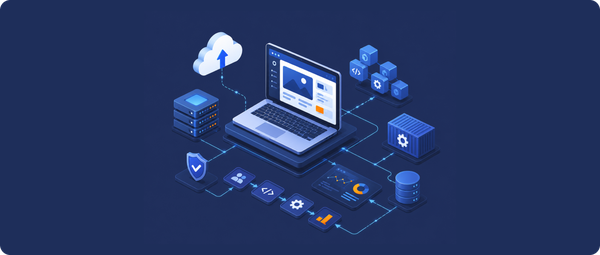
We build every application with scalability in mind. Using modern frameworks, cloud infrastructure, and modular architecture, your platform can grow alongside your business.

Whether you're serving hundreds or hundreds of thousands of users, we'll design a solution that's secure, maintainable, and ready to handle increasing traffic and new features.

What’s the trade-off of building a web application instead of an app store app?

You lose app store-driven discovery and the built-in trust and distribution that comes with it. Instead, your product lives on the open web, where there’s no single marketplace to surface it, so you’re competing with every other website and web app for visibility. In return, you gain full control over distribution, faster iteration cycles, and no platform restrictions or review gates.

What does support and maintenance look like?

Launching your application is just the beginning. We provide ongoing support that includes bug fixes, security updates, performance monitoring, infrastructure management, and feature enhancements.

Whether you need occasional maintenance or a long-term development partner, we can tailor a support plan that fits your business and helps your product continue to evolve.

Recommended reading

Picked for founders building their first web product

Web application development services: how to choose the right partner

Development

Web application development services: how to choose the right partner

Most web application projects fail before a line of code is written. They fail in the partner selection, in the discovery phase, or in the contract, and by the time the build is underway, the outcome is already largely determined. The most recent Standish Group CHAOS data puts the rate of fully successful IT projects at around 31 percent, with half of the rest challenged and the remainder canceled outright. Boston Consulting Group's 2024 research on large-scale technology programs found that two-thirds miss their targets on time, budget, and scope. Outsourced engagements skew worse: Dun & Bradstreet's long-cited Barometer of Global Outsourcing, referenced again this year in Accounting Today, finds that around half of all outsourcing relationships fail within five years.The pattern across those numbers isn't that web application development is unusually hard. It's the way buyers pick partners that makes failure likely. Most evaluation processes select for sales polish and price, when the real predictors of project outcome sit in the discovery phase, the engagement model, the contract terms, and whether the team actually does the work it shows in the pitch.This guide is built from the buyer's side. It covers what makes web application development different from website work, what to vet a partner on, how to choose between fixed-price, time-and-materials, and dedicated-team engagements, the contract clauses that matter, and how to use a paid pilot to test a relationship before you commit. It draws on operational experience running web application engagements at Milo Solutions, including a long-running Stepwise build for the oil and gas industry that the team has continued to expand for several years.

18 min read

Read more
React.js development services: a complete buyer's guide

Development

React.js development services: a complete buyer's guide

Hiring an external React team is easy to get wrong, because most of the risk is invisible when you sign. The code looks fine in a demo, and the problems only surface three months in, when a feature that should take two days ends up taking two weeks.Quick answer: React.js development services cover building, migrating, and maintaining apps built with React. In 2026, hourly rates run from about $25 to $150 depending on region and seniority, and the two decisions that matter most are which engagement model you pick and how carefully you vet the team's code before you commit.I've spent years building React apps for clients and, just as often, inheriting React codebases from teams that came before us, so this guide is what I'd tell a founder or product lead who is about to spend real money on a React partner and wants to avoid the expensive mistakes. React is the most used web framework among developers, at 44.7% in the 2025 Stack Overflow Developer Survey [1], so you have a large market to choose from. That's both the good news and the problem, because plenty of teams list React on their site and far fewer actually think in it.

15 min read

Read more
Enterprise web development: how to build applications that actually scale

Development

Enterprise web development: how to build applications that actually scale

Most conversations I have about enterprise web development start after something has gone wrong: a build stalls, a budget doubles, or a system that worked for 500 users falls over at 5,000. The cause is rarely the framework. Enterprise web development is decided in the first few weeks, in how the work is scoped, who owns the architecture, and whether anyone planned for the system to grow. This guide covers what determines whether an enterprise application scales or is rebuilt, based on projects my team at Milo Solutions has delivered and rescued.

12 min read

Read more

Ready to build your web application?

Let's discuss your idea and decide if web, mobile, or a hybrid approach is the right path for your business.

  • Free consultation
  • Tailored approach
  • No obligation